
Rat Entry Surveys & Drain Rat Prevention Dublin
Base Entry Point — specialist CCTV drain investigation to find how rats are entering your property.
We find the entry point. We solve the problem permanently.
We find where rats are entering your property and recommend a permanent solution. Using CCTV drain surveys, tracing, dye testing and detailed inspection, we identify the entry point instead of simply treating the symptoms.
Rats in the property? Bait does not solve the problem.
Many homeowners call pest control several times, only for the problem to return. This happens because the real entry point has not been found. Rats are entering through broken drains, damaged junctions, open pipe connections, defective manholes or shared sewer systems.
Base Entry Point focuses on finding the route rats are using to access the property, then recommending a proper long-term solution.
Specialist Drain Investigation for Rat Entry Problems
We investigate the drainage system to find how rats are entering the building. Our surveys are designed to locate defects, open connections and access routes that are often missed during standard pest control visits or standard drain surveys.
CCTV drain surveys
Rat entry point detection
Drain tracing and sonde locating
Dye testing where required
Inspection of neighbouring and shared drainage
Rat flap recommendations
Drain repair recommendations
Detailed survey reports
This is a specialist investigation service for homeowners with an ongoing rat problem, especially where baiting, trapping, or basic drain checks have failed. Our specialist package starts from €2,500 including VAT.
How the Survey Works
Step 1 — Initial Inspection
We discuss the rat activity, previous pest control visits, known drain issues and areas where activity has been noticed.
Step 2 — CCTV Drain Survey
We survey the drainage system using professional drain cameras to look for defects, openings, junctions and access routes.
Step 3 — Tracing and Testing
Where required, we use tracing and dye testing to confirm pipe routes, connections and possible entry points.
Step 4 — Identify the Entry Point
We identify the most likely route being used by rats and explain the findings clearly.
Step 5 — Permanent Prevention Plan
We recommend the most suitable long-term solution, such as a rat flap, drain repair, junction repair or further investigation.
Common Rat Entry Points We Find
Rats enter properties through drainage defects that are hidden underground or inside pipework. These problems are not visible from inside the house.
Broken sewer pipes
Defective pipe junctions
Open or unused drain connections
Damaged manholes
Poorly sealed pipes
Shared sewer lines
Surface water pipes connected to sewer lines
Defects on neighbouring drainage systems
Permanent Rat Prevention
Baiting may reduce rat activity, but it does not stop rats from entering the property. Our aim is to find the access route and recommend a solution that prevents the problem from continuing.
Depending on the findings, this may include rat flap installation, drain repairs, sealing open connections or further investigation of shared drainage.
Clear Survey Reports and Video Evidence
After the survey, we provide a clear report showing what was inspected, what was found and what action is recommended. This can include photographs, video references, marked-up notes and practical recommendations.
This is useful for homeowners, landlords, property managers, pest control companies, drainage contractors and insurance claims or queries.
Why Choose Base Entry Point?
Base Entry Point is built around finding the root cause of rat entry problems. We are not simply laying bait or carrying out a basic drain check. We use specialist equipment, careful investigation and practical experience to identify how rats are accessing the property.
Specialist rat entry investigation
Professional CCTV drain camera equipment
Experience working on complex residential properties
Clear explanations and practical recommendations
Focus on permanent prevention
Reports available for customers and contractors
Covering Dublin, Kildare and surrounding areas
How do you get rats out of walls and ceilings?
Rats normally leave their nesting area to search for food and water. We investigate how they are entering and moving through the property, then block the entry route so they cannot return. Where the rats are entering through the drainage system, this may involve identifying the exact drain or sewer entry point and installing a suitable barrier.
How long does it take for the rats to leave the property?
We would normally expect a significant reduction in rat activity during the first week after the entry route has been successfully blocked. However, it can sometimes take up to four weeks for all activity to stop completely, particularly where there is a nest with young rats inside the property.
The exact timeframe depends on the location of the nest, the number of rats present and whether they have access to any other food, water or entry routes.
Can rats come through drains?
Yes. Rats travel through sewer systems and can enter properties through broken pipes, defective junctions, open connections or damaged manholes. Rats may also be seen outside or around the property.
Will pest control bait solve the problem?
No. Bait may reduce activity, but if the entry point remains open, the problem will return. Finding and closing the access route is key to long-term prevention.
Do I need a CCTV drain survey?
Yes. A CCTV drain survey is one of the most effective ways to inspect hidden pipework and identify defects or possible rat access routes.
Can the problem be in a neighbouring property?
Yes. In some cases, especially where drainage is shared, the defect or access point may be a couple of houses away from the affected property. If three houses are connected on a shared drainage run, more than one property may be affected.
Do you install rat flaps?
Yes. Where suitable, a rat flap may be recommended as part of the prevention plan. Some properties require multiple rat flaps to be fitted. In some cases, a drain repair or further investigation may be required instead.
Do you repair drains?
We do not carry out excavation or structural drain repairs ourselves. Where repair work is required, we can provide clear findings for a drainage contractor and, where agreed, help coordinate the next steps.
Do you carry out a follow-up assessment after work is complete?
Yes. Follow-up visits may be required, depending on the findings and the prevention work carried out.
Specialist Rat Entry Investigation Package
From €2,500 including VAT
Base Entry Point is a specialist service for homeowners who have an ongoing rat problem and want the source found properly.
This is not a standard drain survey or a basic pest control visit. Our work focuses on finding how rats are entering the property through the drainage system and putting a permanent prevention plan in place.
Where suitable, rat flaps can sometimes be installed during the survey visit. Rat flaps are charged separately.
Fitted during the survey visit:
4" / 100mm — €250 incl. VAT
6" / 150mm — €300 incl. VAT
If a separate installation visit is required:
4" / 100mm — €350 incl. VAT
6" / 150mm — €400 incl. VAT
Additional rat flaps fitted during that visit are €150 incl. VAT for 4" / 100mm and €175 incl. VAT for 6" / 150mm.
The specialist survey includes:
CCTV drain investigation — surface water and sewer systems
Rat entry point detection
Drain tracing where required
Dye testing where required
Inspection of relevant access points
Recommendations for permanent prevention
Rat flap installation where suitable (charged separately)
Clear explanation of findings
Report and evidence where required
Every property is different. The final scope depends on the drainage layout, access, number of lines to be inspected, shared drainage, neighbouring drains where relevant, and the prevention work required.

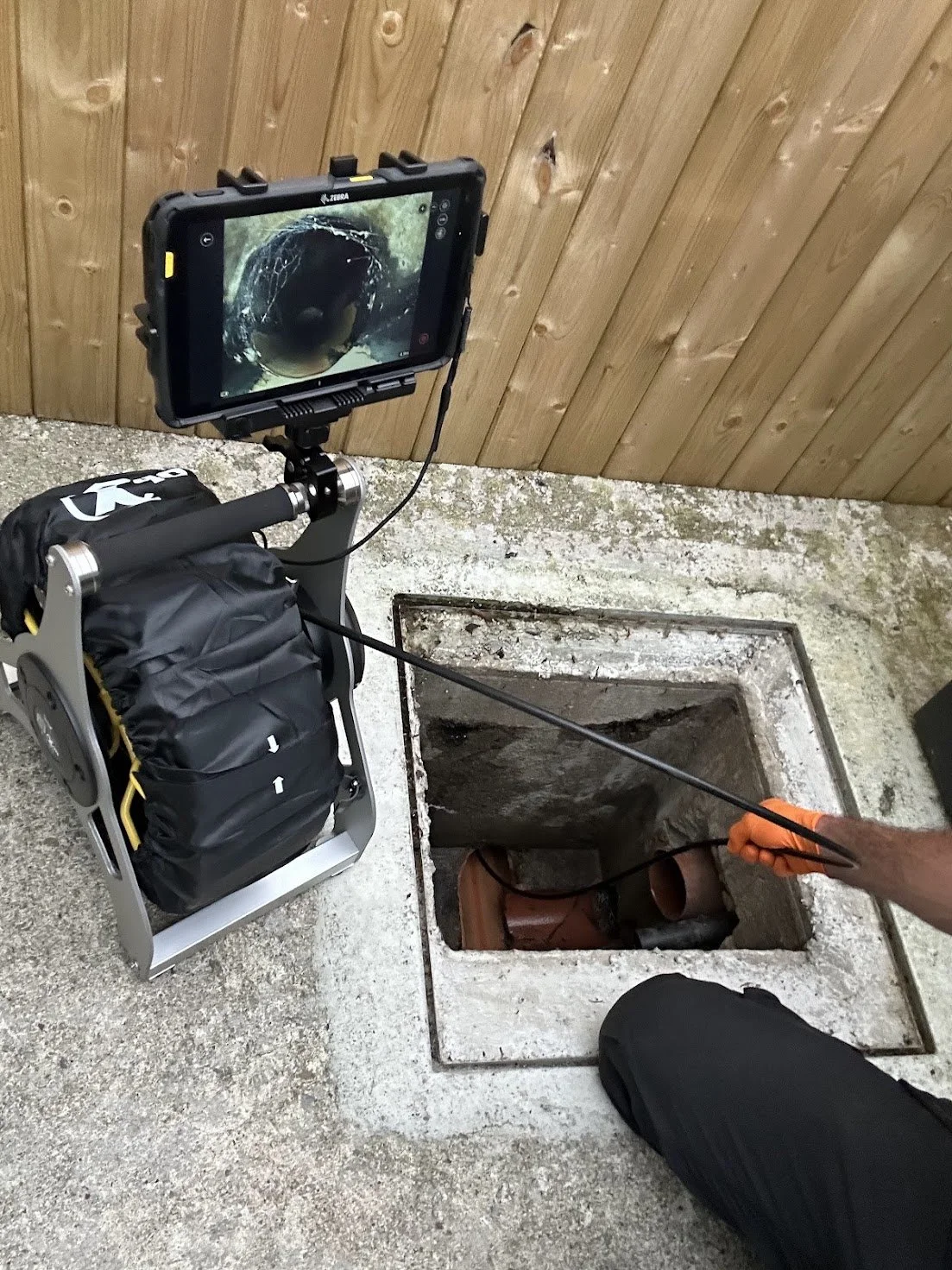
CCTV drain survey underway to inspect the drainage system and identify possible rat entry points.
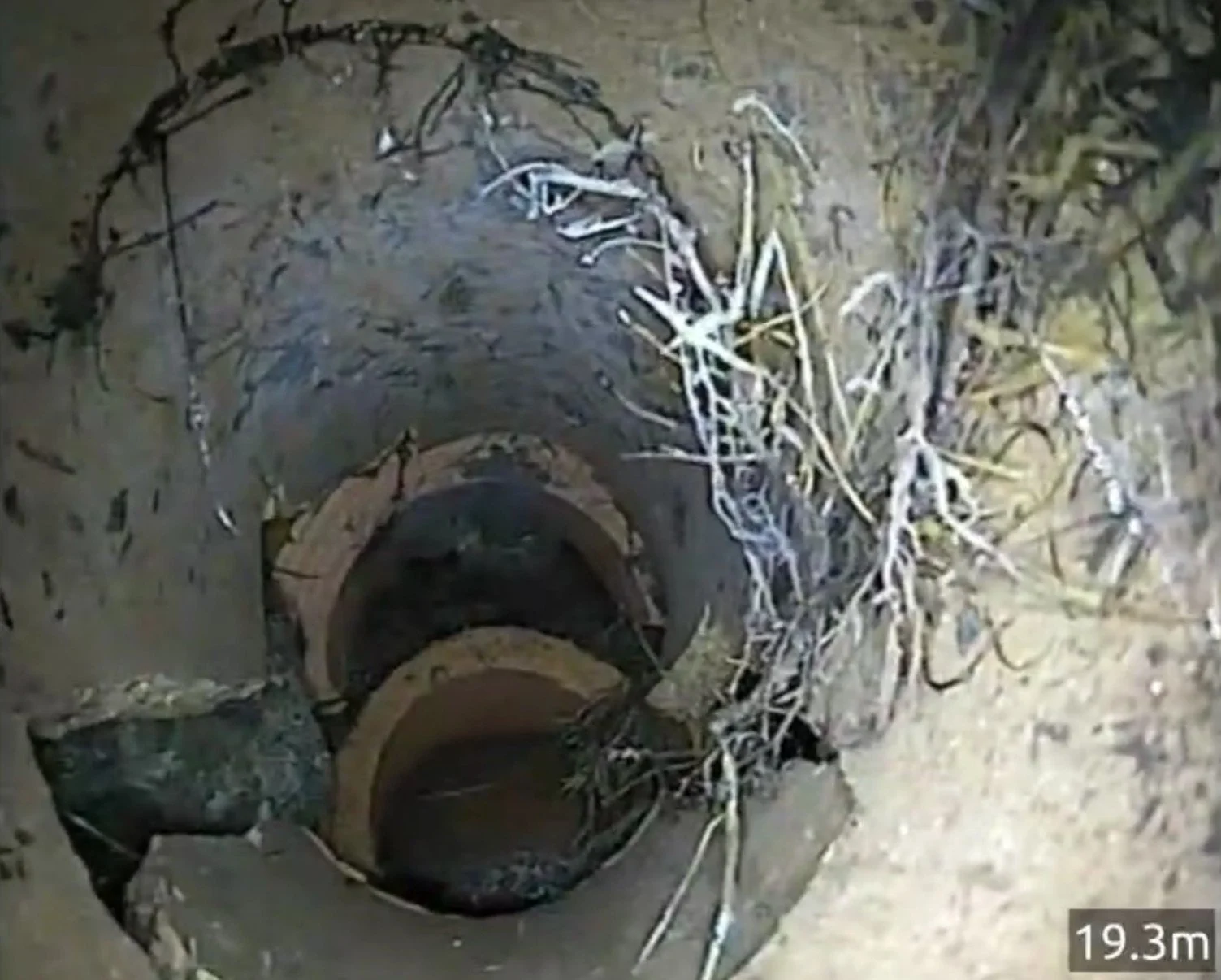
CCTV drain survey footage showing a damaged pipe junction with root intrusion approximately 19.3 metres into the drain — a possible rat entry point requiring further investigation.